
Last updated October 15, 2026
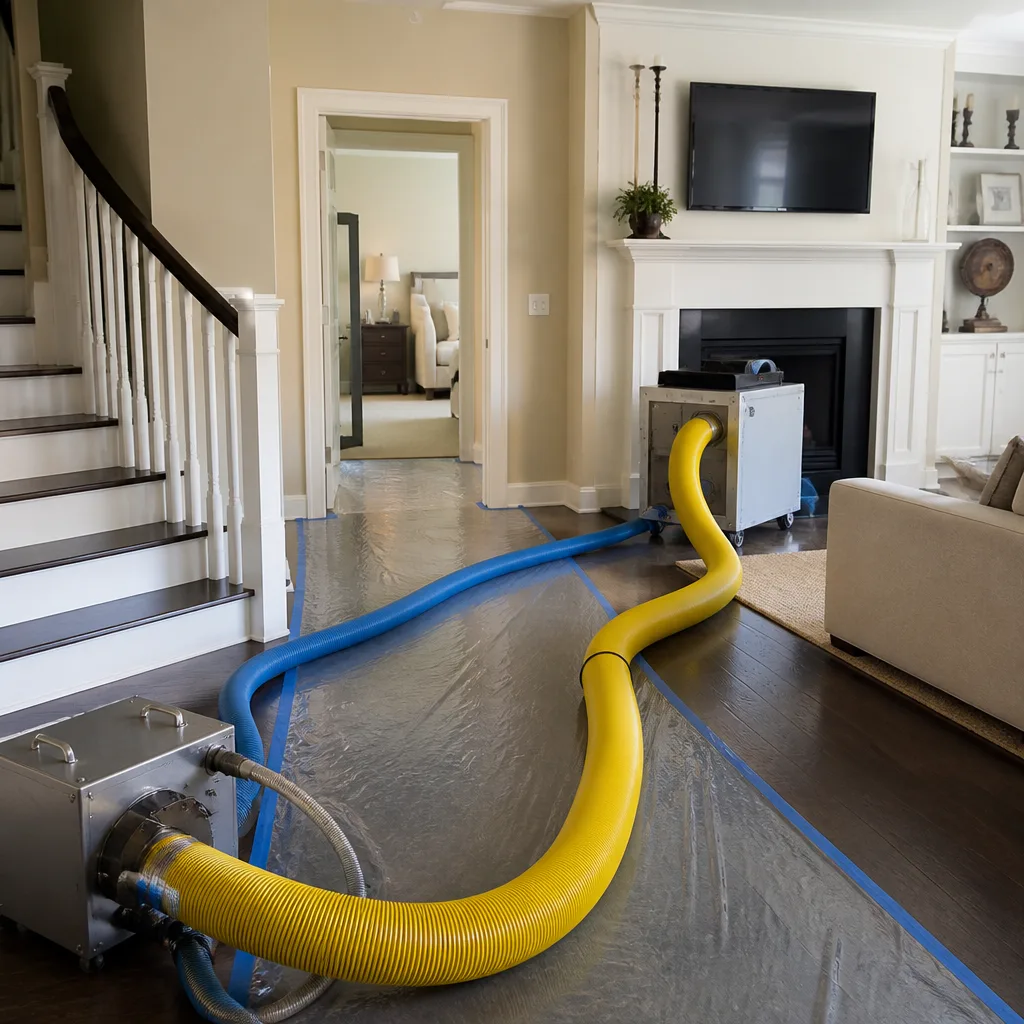 Whole-home duct cleaning
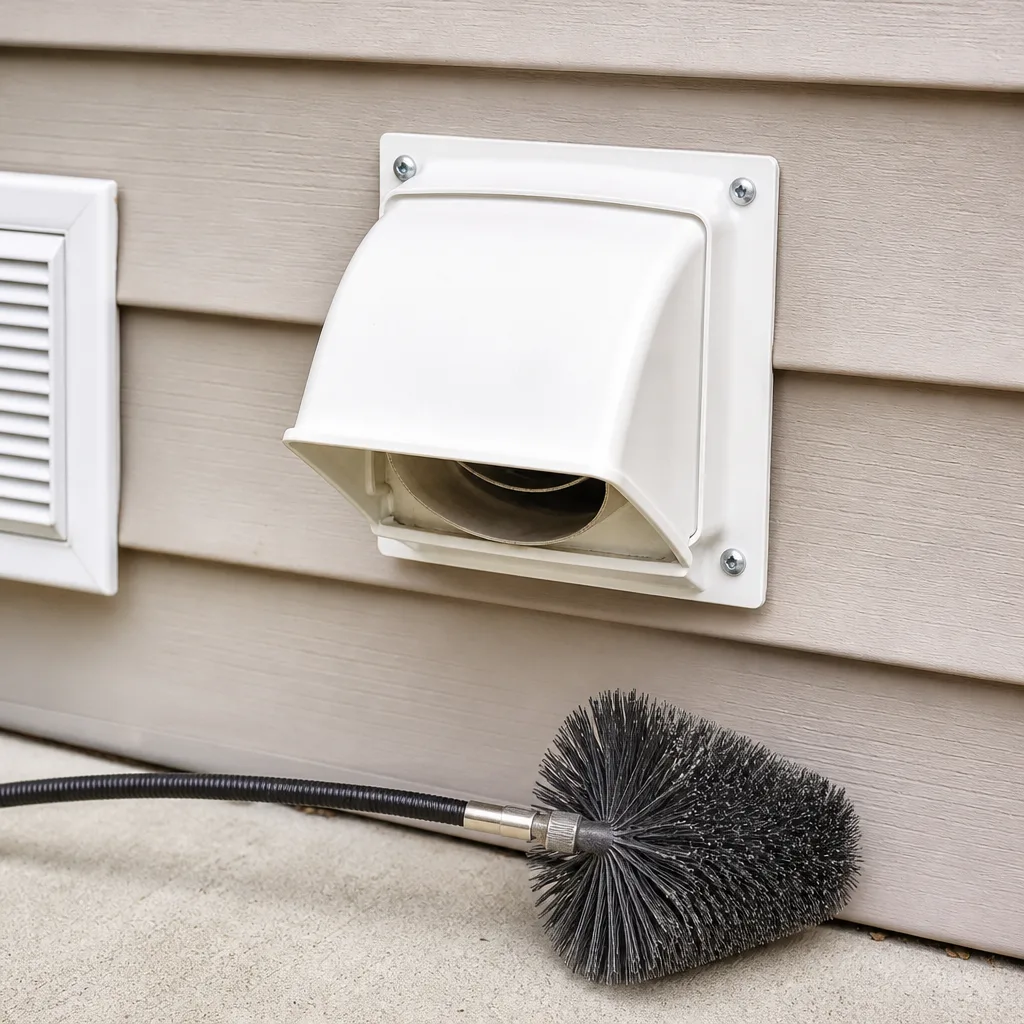 Dryer vent cleaning
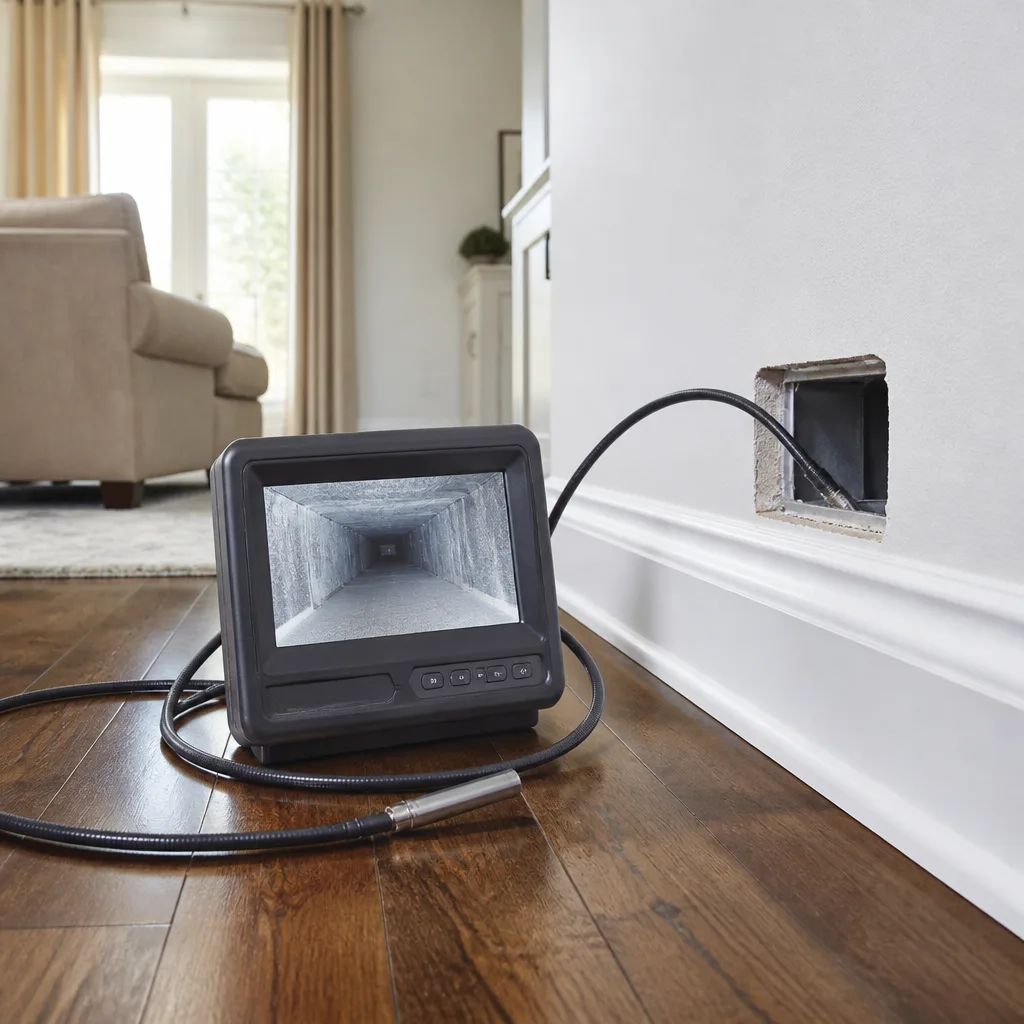 Camera inspection
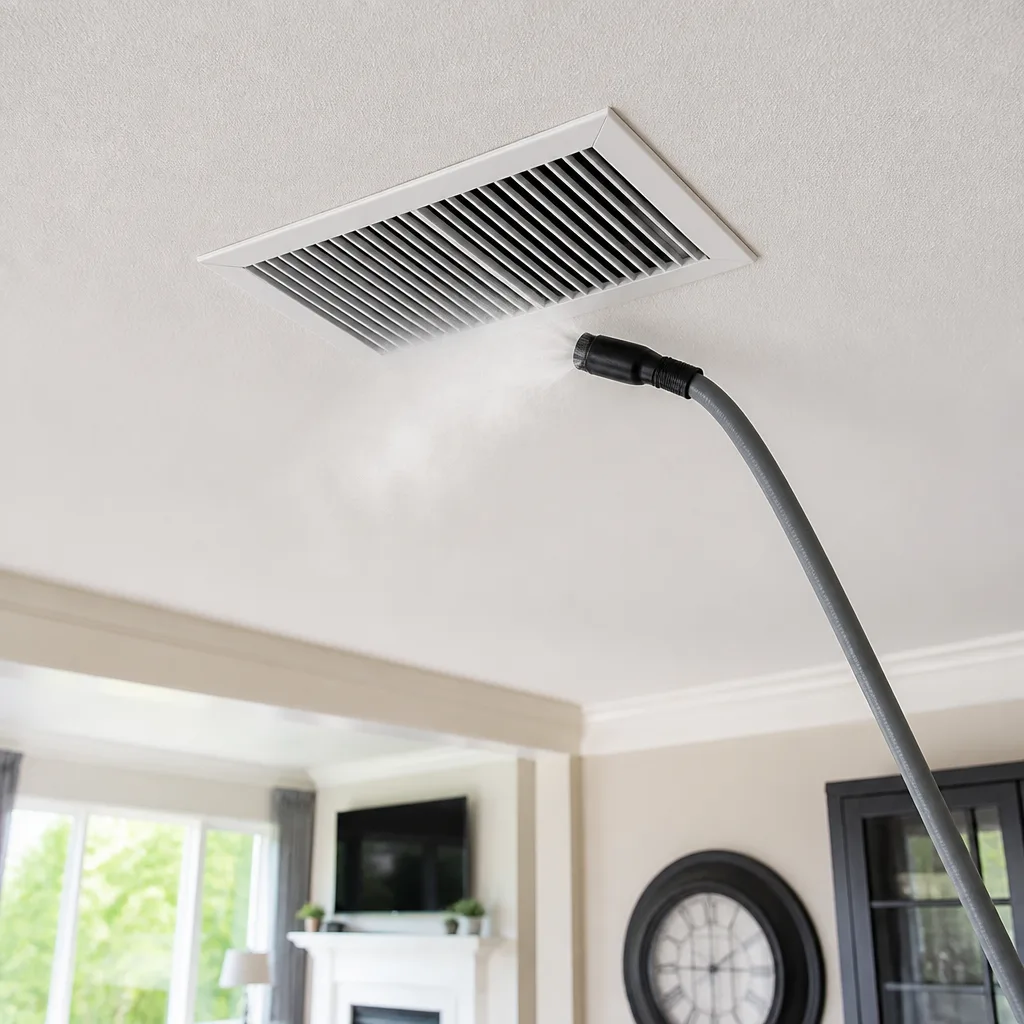 Sanitizing & deodorizing
Whole-system duct and dryer vent check with before-and-after photos - you see exactly what came out of your vents
That "$99 whole-house special" is a bait ad - the real number appears once they are in your hallway, or the "clean" is a shop-vac at the register. We photograph the inside of your ducts before and after instead.
Air Duct Cleaning Maintenance Checklist for Pasadena Homeowners
Most air duct maintenance checklists online are useless to a Pasadena homeowner. They read like they were written for a house in Ohio, with advice about furnace filters in January and humidity control in August. Pasadena sits against the San Gabriel Mountains, gets genuine Santa Ana wind events that push fine dust and dry brush particles through every window seal and door jamb, and has a distinct fire-season air pattern that a Midwestern checklist never accounts for. This guide draws a hard line between what you can observe and do yourself, and what requires a contractor with professional equipment. You’ll learn how to read AQMD data to time your maintenance, which register clues matter, and how to keep a maintenance log that actually holds up if you sell the house or file a warranty claim.
Styles & brands we work with
Quick Answer
For a Pasadena home, the homeowner-level air duct maintenance checklist comes down to six tasks: inspect supply and return registers monthly, change or clean filters every 1 to 3 months depending on AQMD air quality reports, check for visible dust accumulation at register faces every 60 days, look for moisture or staining around registers after heavy rain, schedule our Air Duct Cleaning services every 3 to 5 years, and have dryer vents cleaned annually. The contractor-level checklist, which only a trained technician should perform, includes inspecting the full duct run for disconnected joints, checking the plenum for debris, sealing access points, and testing airflow balance.
Table of Contents
- Monthly Homeowner Tasks: What You Can Check Without Tools
- Using Pasadena’s AQMD Data to Time Filter Changes
- Register Clues: What Each Supply and Return Tells You
- Annual and Multi-Year Contractor Tasks: Where the Line Is
- Older Flex Duct vs. Sheet Metal: Different Homes, Different Checklists
- The Maintenance Log: Format That Works for Resale and Warranty Claims
- Common Mistakes to Avoid
- When to Call a Professional
- Frequently Asked Questions
- The Bottom Line
Monthly Homeowner Tasks: What You Can Check Without Tools
Let’s be direct about what a homeowner can meaningfully inspect without opening up walls or climbing into an attic. You cannot see inside your ducts from your living room. What you can see are the register faces, the return air grilles, and the filter. Those three things tell you more than most people realize, and checking them takes ten minutes a month.
Here is the monthly checklist for a Pasadena homeowner:
- Walk every room with a supply register. Look at the register face. Is there a visible dust halo forming on the ceiling or wall around it? A faint gray ring around a supply register means the system is pushing dust-laden air out into the room. That dust came from somewhere, and usually it’s the ductwork.
- Remove one or two register covers and look inside as far as you can see. You are looking for built-up debris, dust mats, or anything that looks like fine gray lint sitting inside the boot. If you see more than a light coating, the ducts are carrying more particulates than a clean system would.
- Check the return air grille for dust matting. The return is where air gets pulled back into the system. If the grille is coated in gray felt, your filter is either past its change date or undersized for the Pasadena air it is fighting.
- Look for moisture staining around registers after rain events. Pasadena gets most of its rain between November and March. Any water staining, bubbling paint, or rust on a register is a signal that moisture is getting into the duct run, and moisture in a duct system leads to mold and compromised duct insulation.
- Listen when the system shuts off. A noticeable rattle, thump, or metallic pop right after the blower stops can indicate loose duct connections or a failing damper. It is an early warning, not an emergency, but it goes in your log.
These tasks require no tools, no ladder work, and no disassembly beyond lifting a register cover that is already removable by design. That is the homeowner’s lane. Anything beyond this crosses into contractor territory, and we’ll draw that line clearly later in this guide. For the month-by-month discipline, this five-point pass is enough to catch problems before they become cleaning emergencies, and it fits the Pasadena air quality calendar we cover in the next section. For Air Duct Cleaning Warning Signs: A Pasadena Homeowner’s Reference Guide, see our dedicated resource.
If you’re looking for a full professional cleaning rather than just checking boxes, our Air Duct Cleaning in Pasadena service covers the inspection points you can’t reach from inside the house.
Using Pasadena’s AQMD Data to Time Filter Changes and Duct Inspections
The South Coast Air Quality Management District publishes real-time air quality index data for the San Gabriel Valley, and Pasadena consistently ranks among the areas most affected by particulate drift from the mountains and the 210 corridor. Here is the practical takeaway: your filter change schedule should not be a flat 90 days. It should flex with the AQMD index. When Pasadena sees consecutive days at PM2.5 levels above 50, your filter is working harder than it does during a rainy week, and it is collecting more fine particulates.
Here is a filter change schedule that we’ve seen work for Pasadena homes:
- AQMD PM2.5 under 35 for a full month: Change the filter every 90 days. This is the low-particulate baseline, common in spring after the rain window closes and before summer fire season begins.
- AQMD PM2.5 between 35 and 80 for any seven-day stretch: Change the filter every 60 days. This is a normal stretch for Pasadena in summer and fall.
- AQMD PM2.5 above 80 for two or more consecutive days, or any Santa Ana wind event with visible dust in the air: Change the filter at the end of that event. Do not wait. Santa Ana winds push fine particulate into homes even with windows closed, and a filter loaded with that dust restricts airflow and shortens blower motor life.
- If you live within a mile of the 210 or 134 freeway corridors: Assume the 60-day schedule regardless of AQMD because roadside particulate, brake dust, and tire wear particle load is constant, not event-driven.
The same AQMD logic applies to when you schedule a professional duct inspection. If Pasadena has just come through a fire season with sustained unhealthy air days, or if you live in the foothills near Altadena and the Angeles National Forest where ash and brush particulate settle heavily, that is the moment to have a contractor assess the duct system. You do not need a full cleaning after every wind event, but a post-fire-season inspection makes sense. We regularly see homes where a single significant bark beetle or chaparral fire season deposits enough fine ash into the duct run to justify a cleaning, especially in homes with older flex duct that picks up debris more readily than sheet metal.
Register Clues: What Each Supply and Return Tells You
Every register in your Pasadena home is a diagnostic window. The key is knowing what you are looking at. A supply register pushes conditioned air into a room. A return grille pulls room air back to the system. They fail differently, and those failures tell you different things about the duct system.
Here is what to look for at each type of opening:
- A supply register with dust streaks radiating outward on the wall or ceiling: This is not a housekeeping problem, it is a duct contamination signal. The system is pushing fine dust out under pressure. Clean the wall, and the streaks come back within weeks if the ducts are loaded. That reoccurrence pattern is your diagnostic clue.
- A supply register with visible debris sitting in the bottom of the boot when you lift the cover: This is settled material that never made it into the room. It indicates inactive periods where material in the duct run settled back into the boot. Common in Pasadena homes that run the AC hard all summer and then leave the system quiet during shoulder months. The concern is not the debris itself; it is what that debris means about the volume of material upstream in the duct run.
- A return grille with a thick gray mat on the outside face: This tells you the return air is carrying more particulate than the filter is catching, which suggests either a filter past its change date, a filter that is not seated correctly and allowing bypass air, or return duct work pulling from a dirty source like an attic with blown-in insulation or a garage return.
- Any register that appears rusted, corroded, or shows water staining on the surrounding drywall or plaster: This is a moisture entry point. In older Pasadena homes, especially Craftsman and Spanish Revival properties with original plaster and older mechanical chases, a leaking register boot or a failed duct seal can let rain water in. Moisture in the duct means the inside of that run is now a mold risk. This is a call-now condition, not a wait-and-watch condition.
- A supply register that shows little or no airflow when the system runs, while others flow strongly: This is a pressure imbalance. It points to a disconnected or crushed duct run between the plenum and that room. The room never reaches temperature, the system runs longer, and the disconnected run is pulling attic air into the house, not conditioned air from the furnace or air handler.
One note for Pasadena homeowners specifically: older homes in the Bungalow Heaven and Madison Heights neighborhoods often have smaller return air capacity than modern HVAC design calls for. If your return grille is small and your home is original 1920s or 1930s stock, the system is working harder to pull air through a restricted opening, which pulls more particulate into the return run and shortens filter life. That is a design constraint, not a cleaning problem, but it does mean you should not skip the visual register check even one month.
Annual and Multi-Year Contractor Tasks: Where the Line Is
This is the section every generic maintenance checklist botches. Most guides blur homeowner tasks and contractor tasks together, which leaves a homeowner either overreaching into dangerous or destructive DIY territory, or under-inspecting because they think a visual register check covers the system. The line is simple: anything that requires opening the duct system, accessing the plenum, working in the attic or crawlspace, or using negative-air equipment belongs to a contractor.
Here is the contractor-level checklist, and the interval at which it should be performed in Pasadena:
- Full duct system inspection: every 2 years. A technician removes access panels, inspects the plenum, checks the full duct run for disconnected joints and crushed sections, and tests for leaks. In Pasadena’s older housing stock, disconnected duct sections are common after seismic events or simply from decades of thermal cycling.
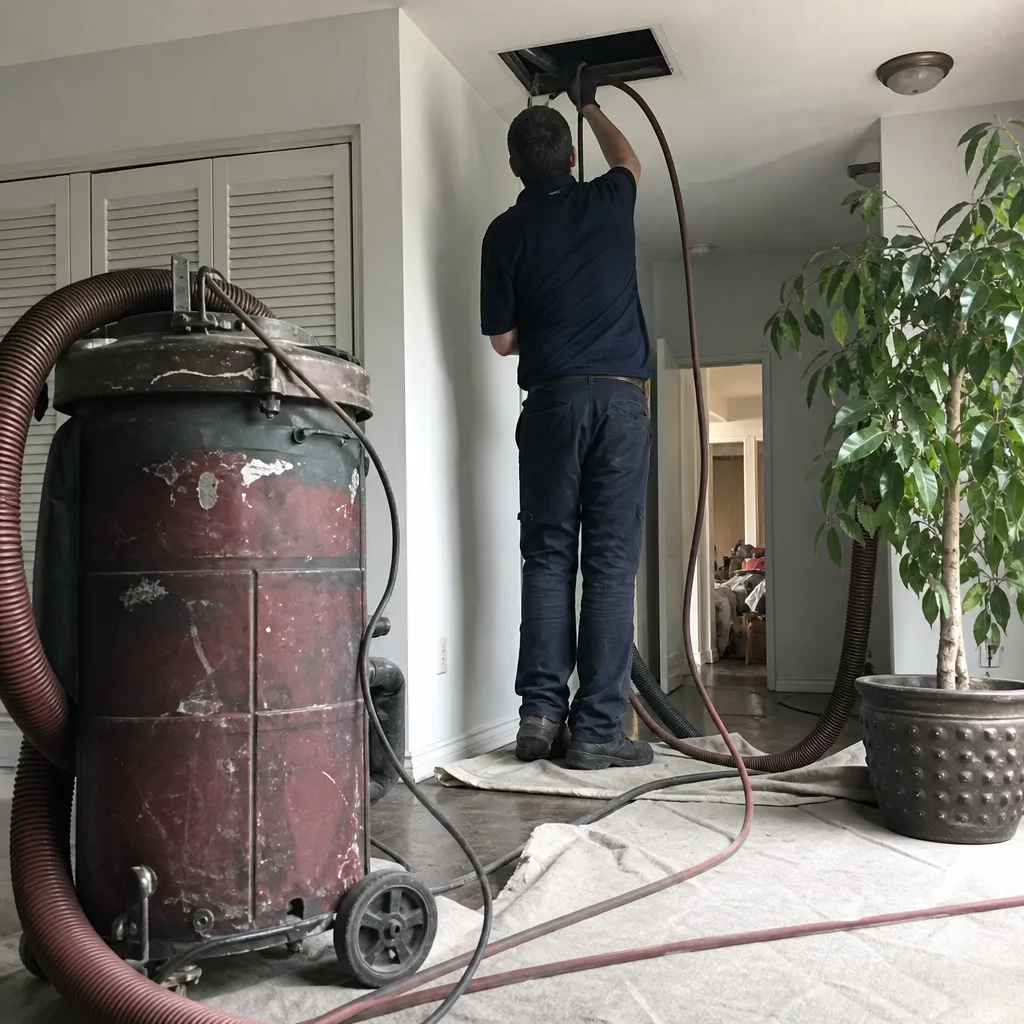
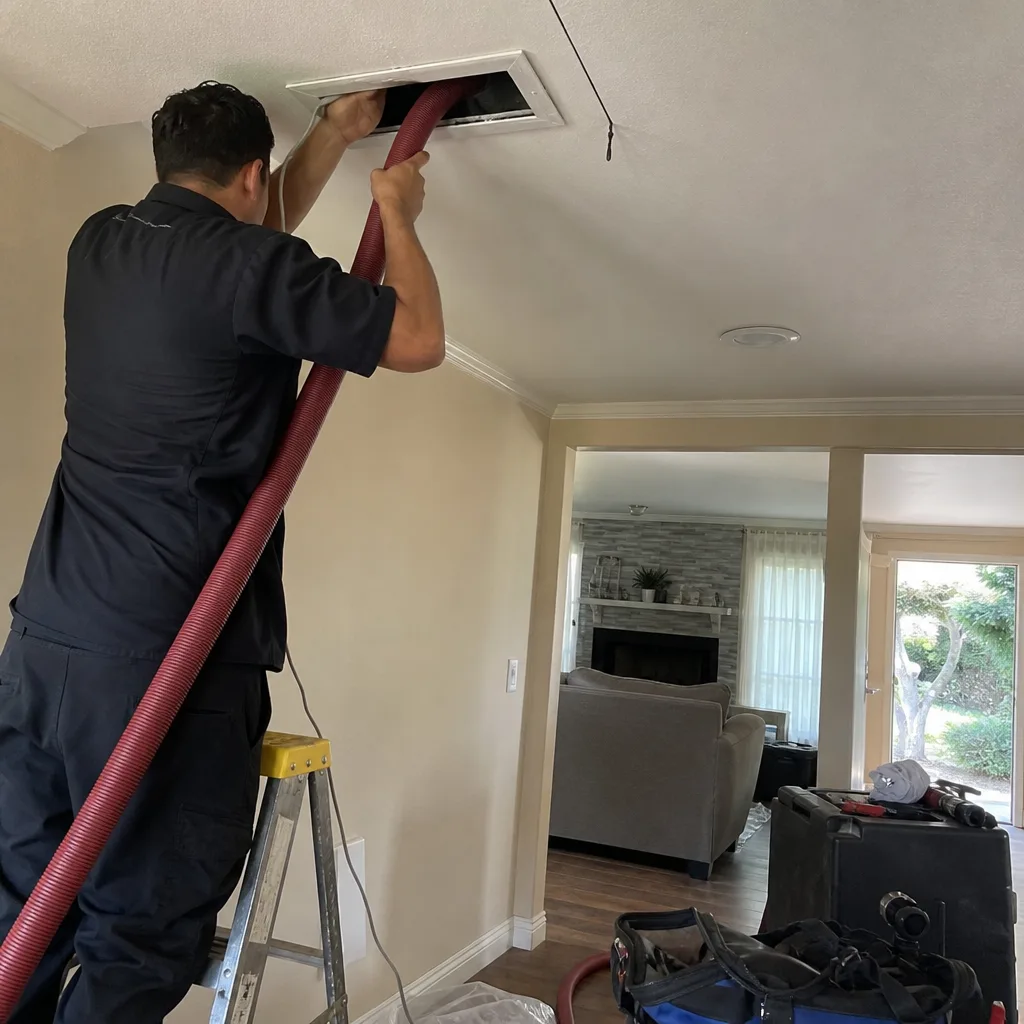
- Professional negative-air duct cleaning: every 3 to 5 years. This is the one most homeowners know about. The negative-air method uses a vacuum system to put the duct under negative pressure while a rotary brush system mechanically dislodges debris from the duct walls. The debris is pulled into a collection system, not blown around the house. For Pasadena homes, the interval flexes: a single-family home with a well-maintained filter and no pets can go 5 years. A home near the freeway, a home with pets that shed heavily, or a home that has been through a renovation can need it at 3 years. We use Rotobrush rotary brush systems and Nikro negative-air machines on every cleaning, which are the same tools commercial crews use.
- Duct sealing inspection: every 5 years or after any major renovation. Duct sealing mastic applied at joints and access points prevents conditioned air from leaking into the attic or crawlspace. A home in Pasadena that loses 40 percent of its conditioned air through leaky duct joints will show it in the summer electric bill and in rooms that never reach the thermostat setting. If you’re curious about the specifics, our Duct Sealing in Pasadena service covers the full scope.
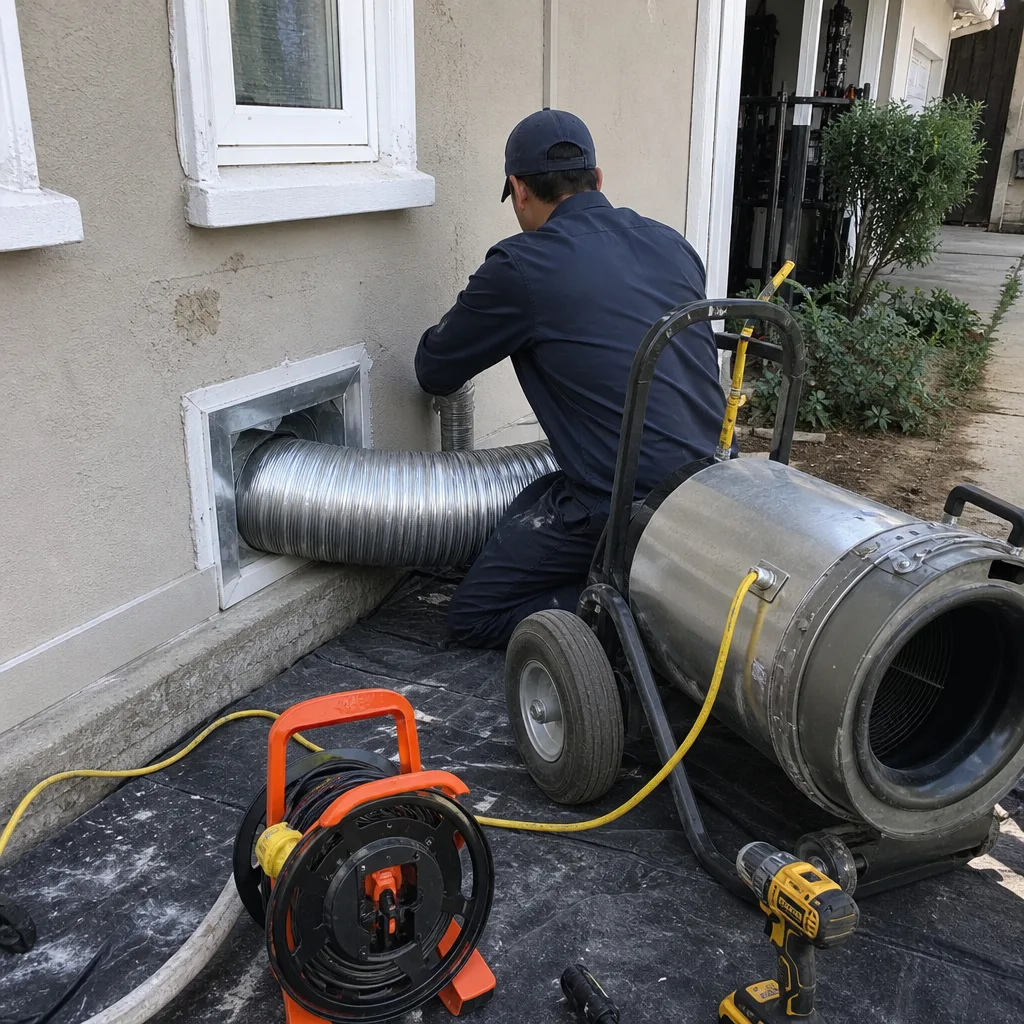
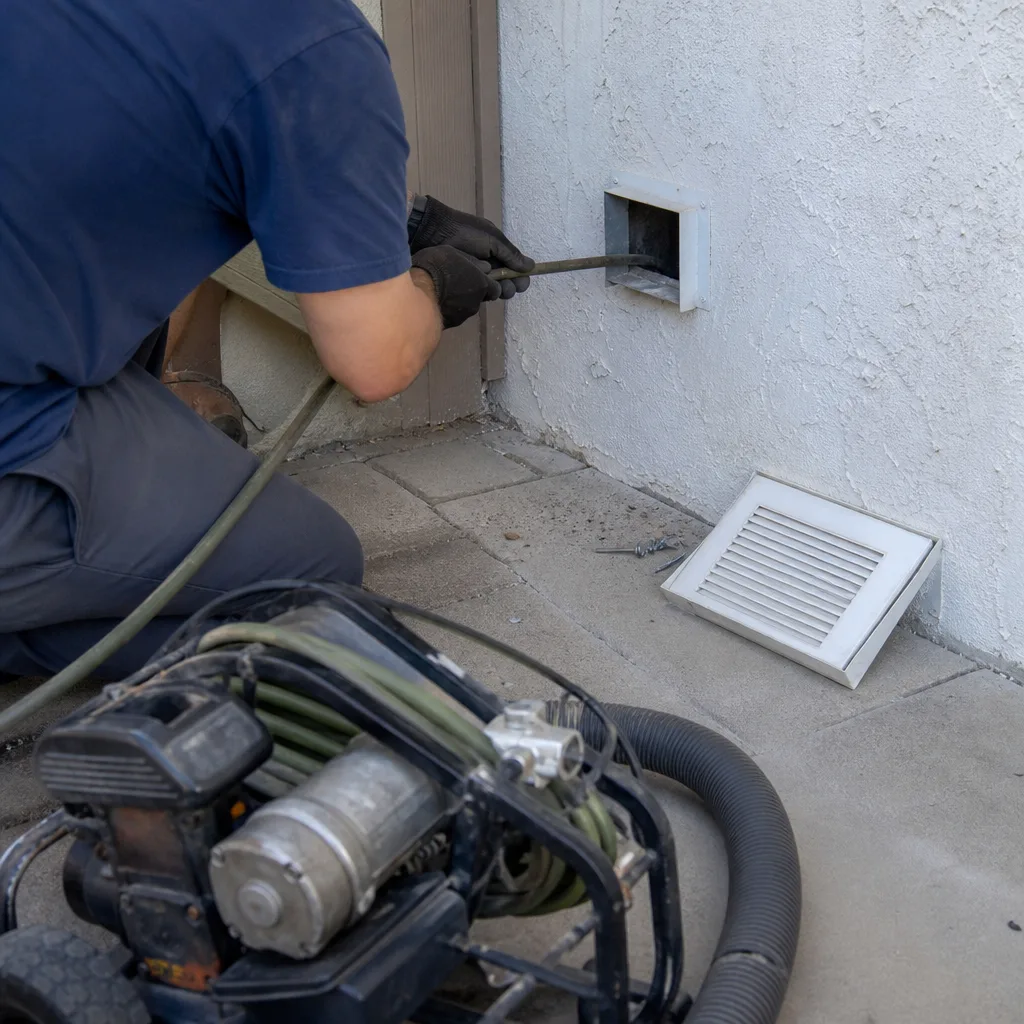
- Dryer vent cleaning: every 12 months. This is separate from air duct cleaning, but every homeowner should pair it. Lint accumulation in the dryer vent is a fire hazard, and Pasadena homes with longer vent runs, common in mid-century and ranch floor plans where the laundry room is in the center of the house, are at higher risk. Our Dryer Vent Cleaning in Pasadena service handles this on the same discipline: written price before work, uniformed technicians, and a clean site at the end.
Notice that none of these tasks overlap with what we told you to do monthly. The homeowner’s lane is observation: look, listen, log. The contractor’s lane is intervention: open, clean, seal, test. If any guide tells you to do both, that guide has not thought carefully about where a homeowner’s reach ends and a technician’s begins.
When you do schedule a professional service, we answer calls at Hollis Air Duct Pasadena home with a live person, 24 hours a day. No voicemail loops.
Older Flex Duct vs. Sheet Metal: Different Homes, Different Checklists
Pasadena’s housing stock is not one thing. The Craftsman bungalows of Bungalow Heaven and the Spanish Revivals of the San Rafael area mostly have sheet metal ductwork. The mid-century ranch homes built in the post-war expansion into Hastings Ranch and much of east Pasadena often have flex duct, particularly in attic runs. The two systems fail differently, and your inspection checklist should reflect what is actually in your home.
If you have flex duct, the failure modes are sagging, kinking, disconnection, and internal liner failure. Flex duct is a wire coil wrapped in insulation with an inner liner. When the liner breaks down with age, the fiberglass insulation is exposed to the airstream, and now you are breathing insulation particles. A flex duct run that sags in a hot Pasadena attic also loses airflow to the far end of the house. Your checklist items for flex duct: look for any runs that have visible sags between supports, check any attic-accessible sections for kinks where the duct makes a sharp turn, and listen for flapping or rattling sounds when the blower runs, which indicates a liner that has come loose. Flex duct should be replaced, not patched, when the liner fails. We see this regularly in Pasadena homes built in the 1960s and 1970s where the original flex duct is now 50 years old.
If you have sheet metal ductwork, the failure modes are joint separation, rust, and poor sealing. Sheet metal holds up longer than flex, but it is not immune to Pasadena conditions. Joint separation happens when the mechanical fasteners or tape fail, often after the thermal expansion cycles of hot summers and cooler winters. Rust is a moisture signal, the same one we mentioned in the register section. The checklist items for sheet metal: look for gaps at joints where visible, check for rust streaks or staining anywhere along the duct run, and verify that every register boot is firmly attached. Sheet metal can often be sealed with duct sealing mastic, which is a far less expensive fix than replacing a run. The decision between sealing and replacing comes down to the condition of the metal itself, and that is a contractor judgment.
Homes that are a mix of both systems, which is common in Pasadena homes that have had additions put on, should be inspected with both checklists. The addition side with flex duct has its own failure clock, and the original side with sheet metal has its own. Do not assume the whole system ages at the same rate.
The Maintenance Log: Format That Works for Resale and Warranty Claims
A maintenance log is only useful if someone else can read it later and understand what was done, when, and by whom. That someone might be a home inspector during a resale, an HVAC manufacturer’s warranty department, or your own future self trying to remember when the last cleaning happened. The format matters more than most people think.
Here is the format we recommend for Pasadena homeowners, and the logic behind each field:
- Date: Use the actual date, not a season. “Spring 2024” is useless for a warranty claim.
- AQMD PM2.5 reading at time of inspection: This ties the maintenance event to the air quality conditions that drove it. It is a Pasadena-specific data point that shows anyone reviewing the log that you understood the local environment, not just a generic schedule.
- What was checked: Be specific. “Checked all supply registers for dust halos; found none” is a useful record. “Duct check” is not.
- What was found: Again, specific. “Return grille showing moderate gray matting, filter at 45 days” gives the next reader real information.
- What was done: This is where you record filter changes, register cleaning, or professional service performed.
- Who did it: If a contractor performed work, record the company name and what they did. If you did the monthly check yourself, write “homeowner.”
- Next action due: This is the field that keeps the log moving forward. “Schedule negative-air cleaning by June based on 4 years since last service” is a clear next step.
Keep the log in a simple notebook near the furnace or air handler, or keep it as a spreadsheet with the same columns. Paper works fine. The point is not the tool, it is the discipline. A log with three years of consistent entries shows a home inspector that the mechanical systems were not neglected, and it gives a manufacturer’s warranty department a timeline they can verify if a blower motor or heat exchanger fails. For Pasadena resale specifically, homes change hands in a market where buyers are increasingly asking for evidence of maintenance, not just the seller’s word. A log is the cheapest negotiating tool you will ever keep.
Common Mistakes to Avoid
- Assuming a filter change is the same thing as duct maintenance. It is not. The filter protects the equipment from the air that is already in the system. It does nothing for the dust, debris, and construction material already sitting in the duct run. A clean filter on a dirty duct system is a clean filter moving dirty air.
- Trusting a low-ball per-vent price from a company that has never seen the home. Pasadena homes vary wildly in duct layout and access difficulty. Any company quoting a price before inspecting the system is either padding it dramatically or planning to find “additional charges” once the technician is inside. The only defensible method is a written price after inspection and before work starts. That is the Garrison Standard, and it is the one we follow on every job in Pasadena.
- Ignoring the return side of the system. Homeowners fixate on supply registers because that is where dust appears. But the return side is where air enters the system, and a dirty or restricted return pulls more particulate load into the duct run. A return-side inspection is as important as any supply register check.
- Delaying a cleaning after a renovation or remodel. Pasadena homes undergo regular renovation, especially in neighborhoods like Normandie Heights and the historic districts where owners update while preserving character. Drywall dust, plaster dust, and sawdust get pulled into the duct system during construction. That material will sit in the ducts and recirculate until a professional negative-air cleaning removes it. Schedule the cleaning after the contractor is done, not before.
- Thinking a newer home does not need duct inspection. Newer Pasadena construction is not immune. We have found construction debris, paint chips, and even drywall offcuts in ducts of homes that are less than two years old. Builders clean for the final walkthrough, not for the duct interior. A new-to-you home should get a duct inspection regardless of age.
- Relying on memory instead of a log. “I think it was about three years ago” is not a maintenance record. The log we outlined earlier is the difference between a defensible timeline and a guess. If you ever need to file a warranty claim or answer a buyer’s inspection question, the log is what carries the day.
When to Call a Professional
Some conditions are not monthly checklist items. Call a contractor if you see water staining around a register after a rain event, if a register shows no airflow while the rest of the house flows strongly, if you see visible mold growth on an interior duct surface, or if the house has just come through a renovation with significant drywall work. These are not wait-and-watch conditions in a Pasadena home, where moisture and particulate load interact with older building materials and can turn a small problem into a large one quickly. If the system has not been professionally cleaned in more than five years, that call is overdue by any standard. Hollis Air Duct Pasadena offers free estimates in Pasadena – call (626) 469-5477 and you will talk to a live person, not a voicemail tree.
Our technicians use Rotobrush rotary brush systems and Nikro negative-air machines on every job, and filtration products from Honeywell, Aprilaire, and Abatement Technologies are discussed in plain terms so you know exactly what is being installed and why. Every job gets a written price before work starts, and every job is covered by the 365-Day Done Right Promise. If it is not done right, we make it right, in writing, for a full year.
Frequently Asked Questions
Every 3 to 5 years for most Pasadena homes. Homes closer to the 210 or 134 freeway corridors, homes with multiple pets, and homes that have been through a renovation should plan for every 3 years. Homes with disciplined filter changes, no pets, and low occupant turnover can typically go 5 years. The Pasadena variable that moves the needle most is fire season particulate, which is why we recommend a professional inspection after any sustained unhealthy AQMD period. Call us at (626) 469-5477 for a free estimate and we’ll assess your system honestly.
Because they are built on a per-vent teaser price that will not survive the technician’s arrival. The air duct cleaning industry has a documented bait-and-switch pattern: advertise a $49 whole-house price, then find “mold,” “excess debris,” or “additional vents” once the crew is inside. We do not work that way. Our price is written down after we inspect the system and before any work starts, and it does not move at the door. That is the Garrison Standard, and it is the same one we have followed since 2004.
Ask for before-and-after photos of your own ducts. A legitimate contractor using negative-air equipment and a rotary brush system will have no problem photographing the interior of the duct run before and after cleaning. If a company refuses or deflects, that is your answer. We provide before-and-after documentation on every cleaning job in Pasadena because we want you to see exactly what was in the ducts and exactly what is left after we are done.
The negative-air method puts the duct system under vacuum pressure using a machine like a Nikro negative-air unit, which pulls debris out of the ducts into a collection system rather than blowing it into your living room. It matters in Pasadena because the fine particulate we deal with, especially fire season ash and freeway dust, is small enough to stay suspended in the air if it is not captured at the source. A rotary brush system dislodges the material from the duct walls, and the negative-air system captures it. That combination, using Rotobrush and Nikro equipment, is what professional-level cleaning actually means.
Yes. Older Pasadena homes, particularly Craftsman and Spanish Revival stock built before 1940, often have sheet metal ductwork that holds up well but may have outdated sealing and undersized returns. Mid-century homes built into Hastings Ranch and east Pasadena often have flex duct that degrades with heat and age. The maintenance interval is the same, but the failure modes are different, which is why the checklist in this guide distinguishes between the two systems. If you do not know what type of ductwork you have, a contractor inspection is the fastest way to find out.
It covers the work we do, in writing, for a full year. If any part of the cleaning, sealing, or dryer vent service fails within 365 days, we come back and make it right at no charge, including a free second visit. It is not a vague satisfaction guarantee. It is a written commitment that survives after the truck leaves your Pasadena driveway. That is the difference between a company that stands behind its work and one that hopes you will not call back.
The Bottom Line
A useful air duct maintenance checklist for a Pasadena homeowner separates observation from intervention. For more guides & resources on home maintenance, explore our blog. You check register dust patterns, filter condition, moisture staining, and airflow every month. You change filters on a schedule that flexes with AQMD particulate data, not a flat 90 days. You log every observation in a format that holds up for resale and warranty. And you call a contractor for the work that requires opening the system: negative-air cleaning every 3 to 5 years, duct sealing inspection every 5 years, dryer vent cleaning annually. The Pasadena air does not care about national averages. Your maintenance schedule should not either.
Written by Roy Castellanos, Owner at Hollis Air Duct Pasadena, serving Pasadena since 2004.
See the difference
 Before
 After
After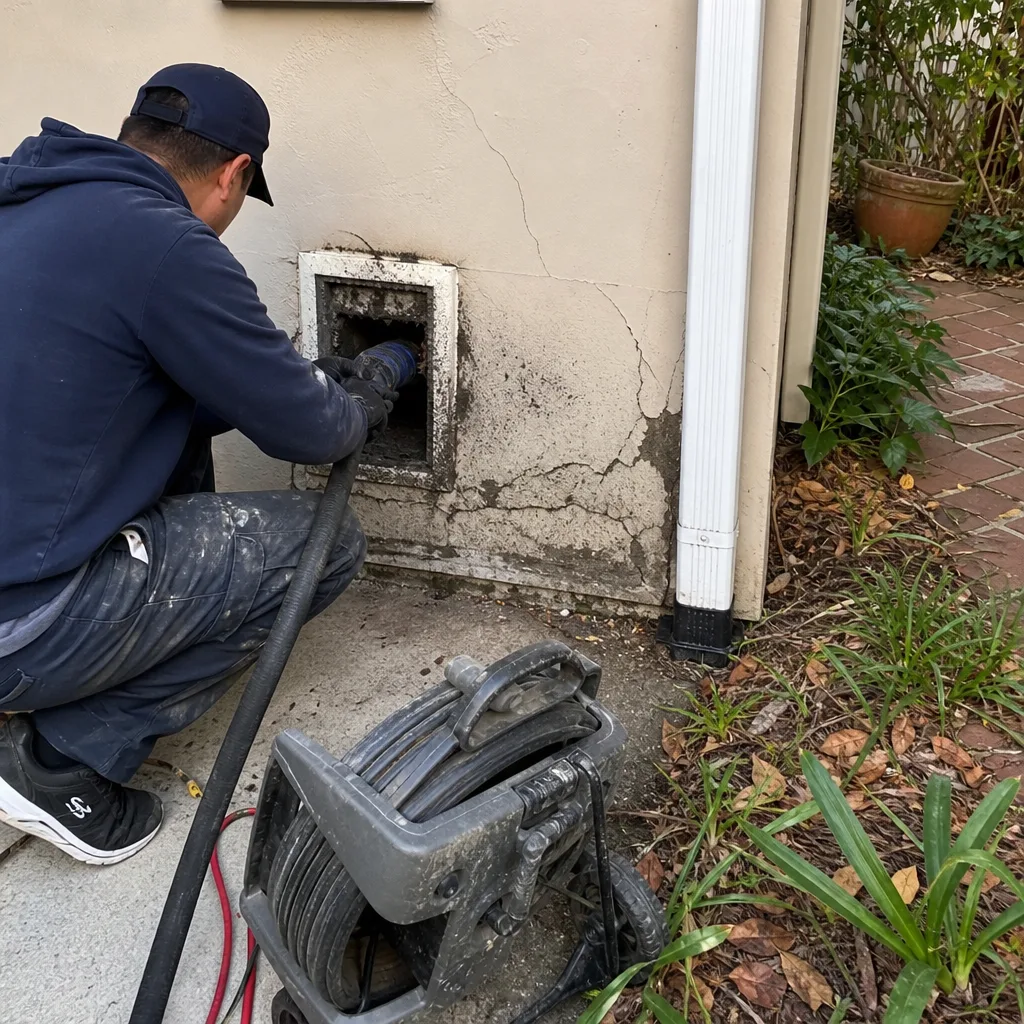 Before
 After
After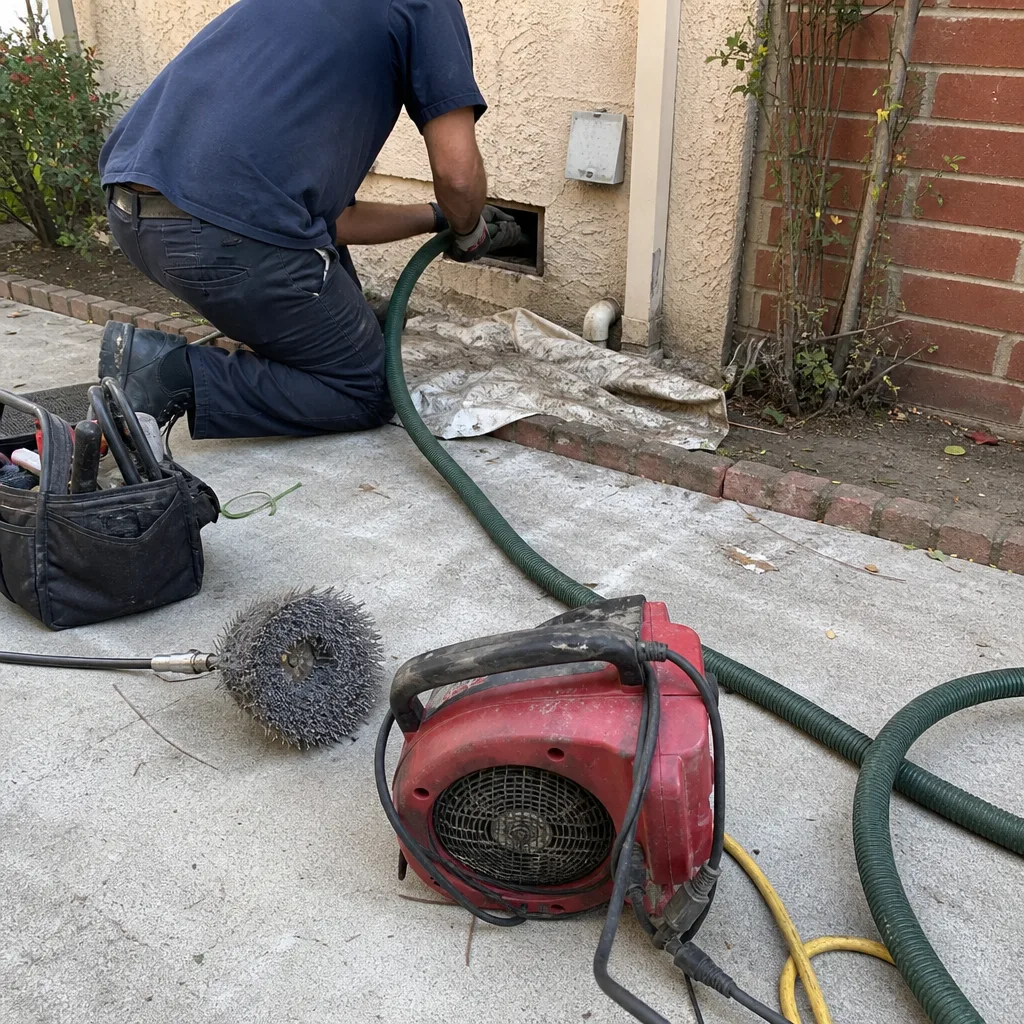 Before
 After
After