
Last updated October 15, 2026
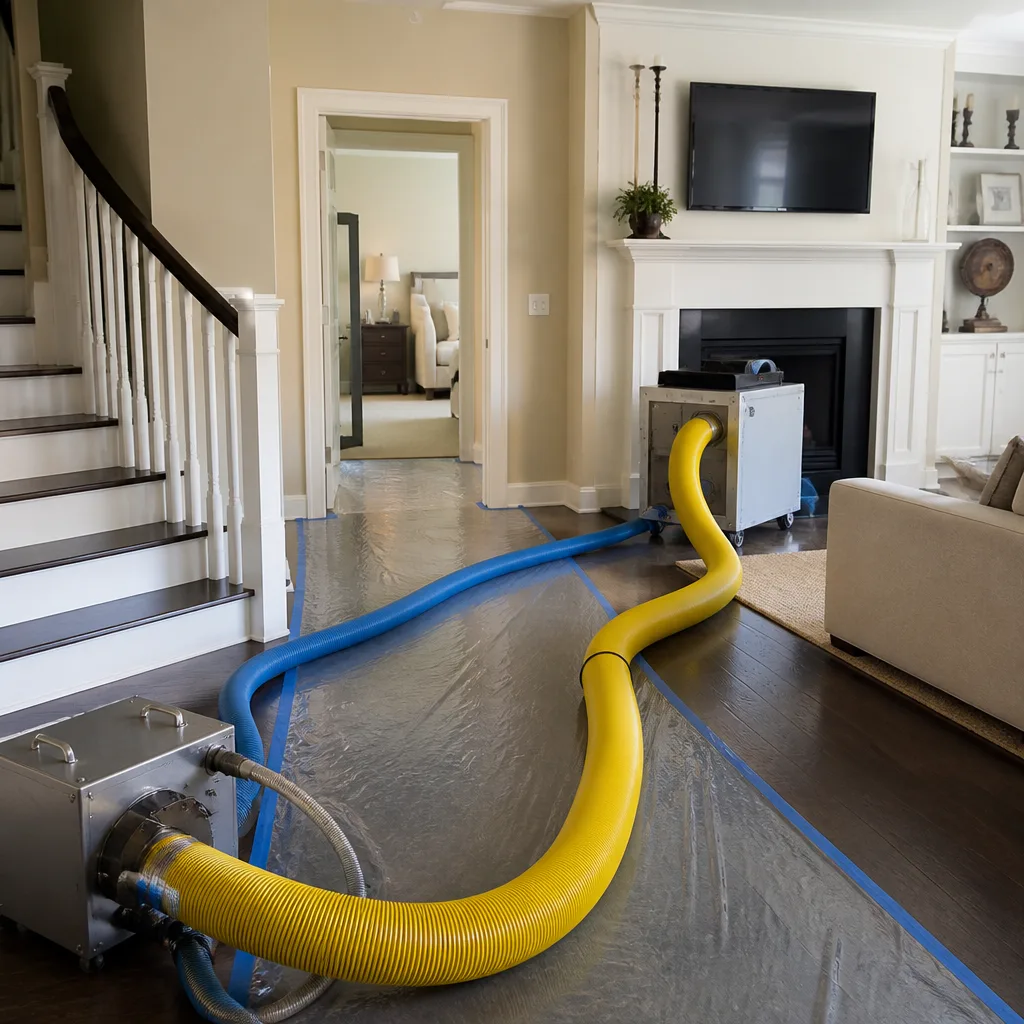 Whole-home duct cleaning
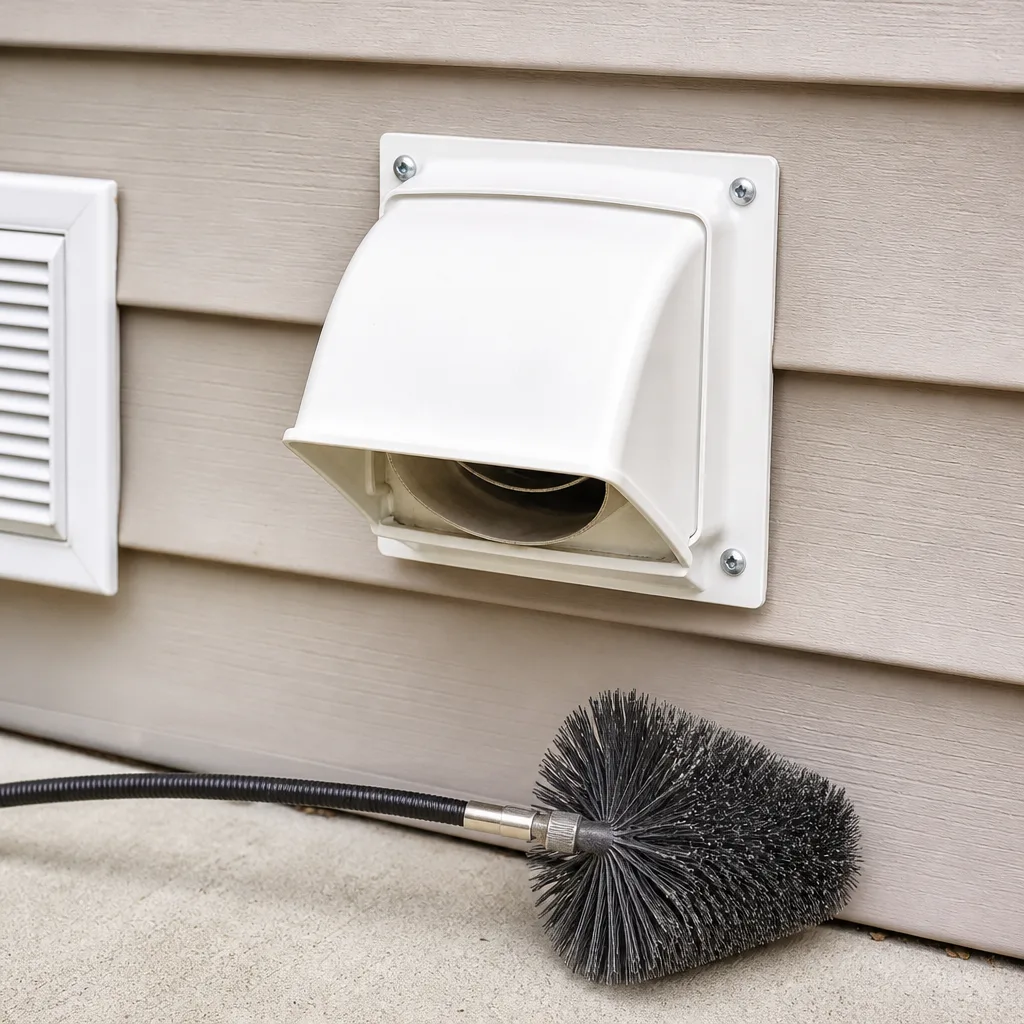 Dryer vent cleaning
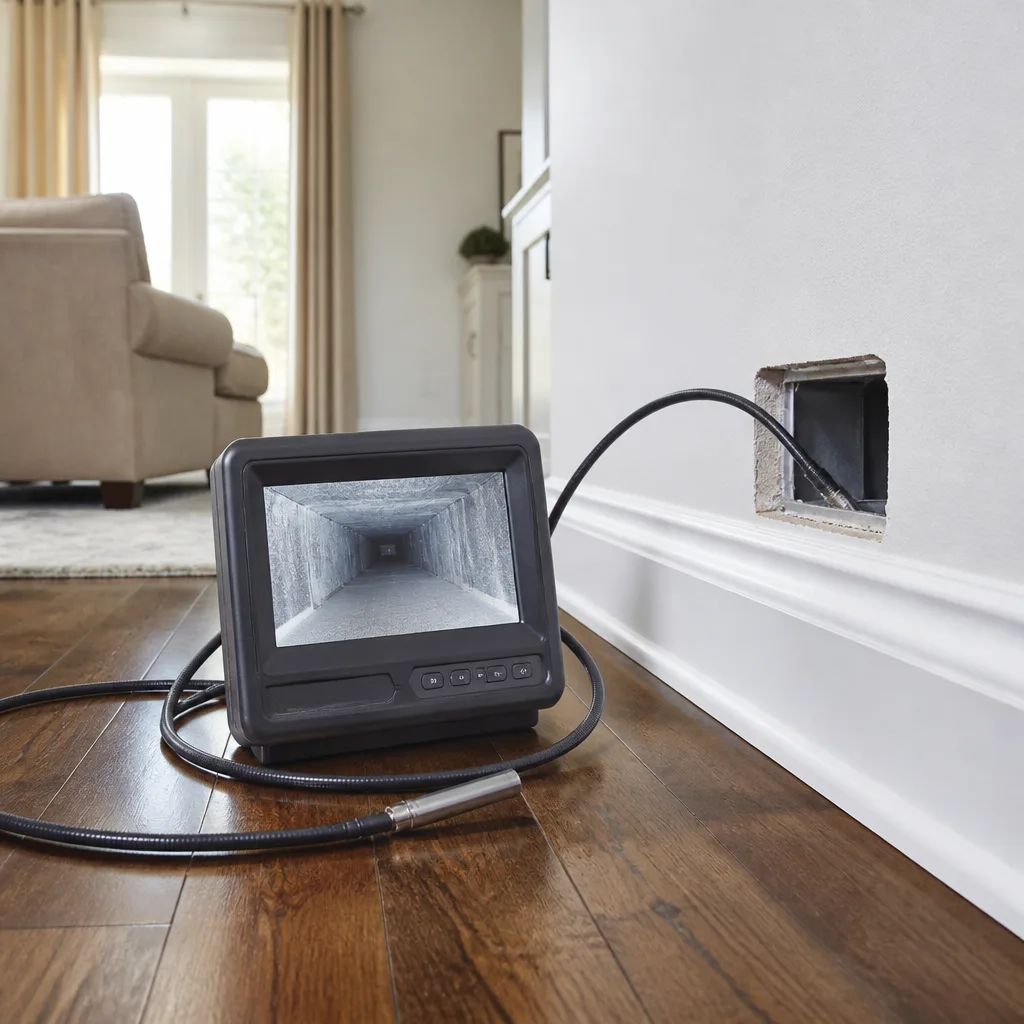 Camera inspection
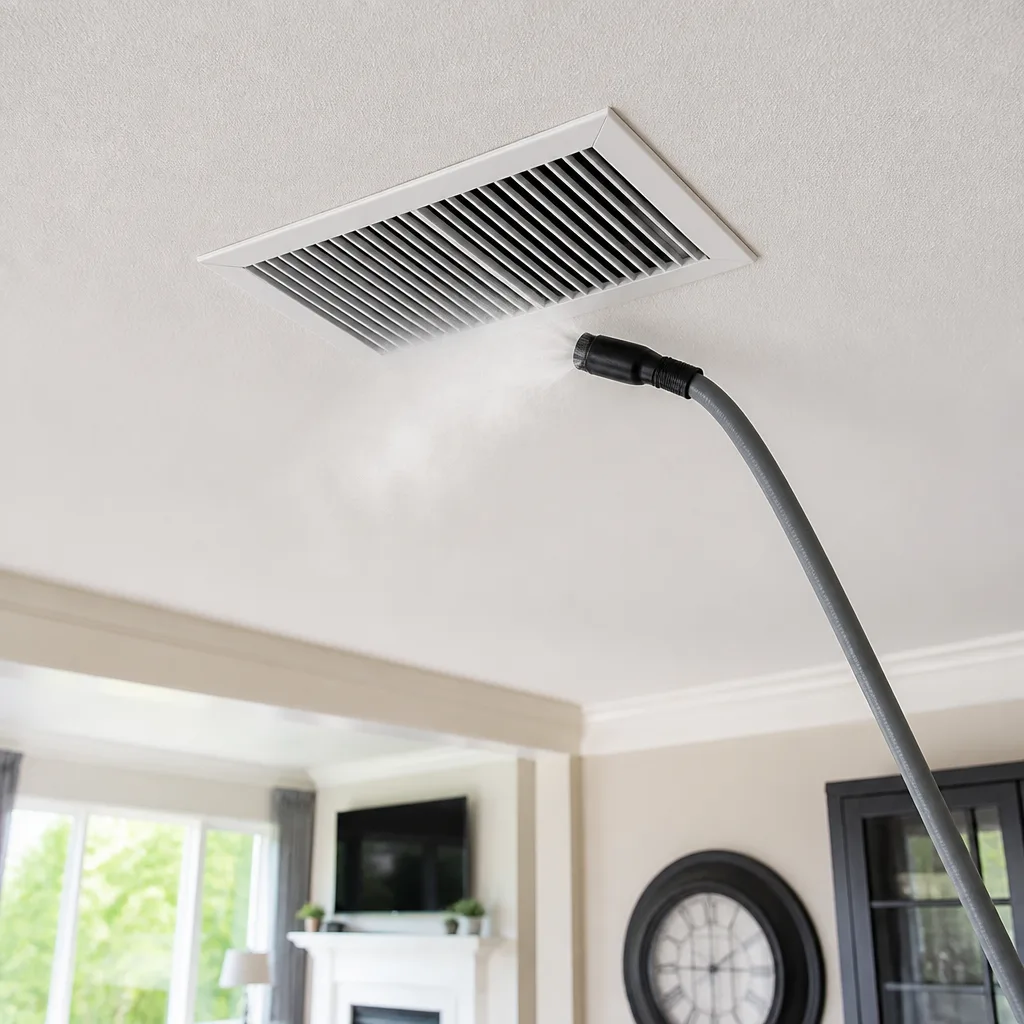 Sanitizing & deodorizing
Whole-system duct and dryer vent check with before-and-after photos - you see exactly what came out of your vents
That "$99 whole-house special" is a bait ad - the real number appears once they are in your hallway, or the "clean" is a shop-vac at the register. We photograph the inside of your ducts before and after instead.
The Complete Guide to Air Duct Cleaning in Pasadena
Dust is visible. Mold is visible. The inside of your air ducts is not, which is why the air duct cleaning industry exists in the first place. In Pasadena, where dry-season dust and Santa Ana winds push fine particulate through every crack in a home’s envelope, homeowners face a genuine question: is duct cleaning a real maintenance task or a marketed one? This guide separates what the research says from what the sales pitch says, including what a legitimate our Air Duct Cleaning services job in Pasadena should actually look like, what it should cost, and how to spot the difference between a thorough service and a blow-and-go. You’ll learn the same standards we hold our own crews to.
Styles & brands we work with
Quick Answer
Air duct cleaning in Pasadena typically costs $400 to $850 for a full single-system home, depending on square footage, number of returns, and level of contamination. The EPA does not recommend annual duct cleaning as a routine practice, but it does recommend cleaning after specific events like water damage, pest infestation, or visible mold growth inside the ducts. Pasadena homes with central forced-air systems, older ductwork, and years of dust accumulation likely need cleaning every 3 to 5 years instead of every 12 months.
Table of Contents
- What the EPA Actually Says About Duct Cleaning
- How Pasadena’s Climate and Santa Ana Winds Affect Your Ducts
- NADCA-Standard Cleaning vs. a Blow-and-Go Job
- What a Legitimate Duct Cleaning Looks Like, Step by Step
- How Much Air Duct Cleaning Costs in Pasadena
- What Documentation You Should Receive After the Job
- Red Flags in the Pasadena Market
- How Often Should You Actually Clean Your Ducts?
- Common Mistakes to Avoid
- When to Call a Professional
- Frequently Asked Questions
- The Bottom Line
What the EPA Actually Says About Air Duct Cleaning
The Environmental Protection Agency’s official position on duct cleaning is shorter than most Pasadena homeowners expect, and it contradicts a lot of local marketing. The EPA does not recommend routine air duct cleaning as a standard annual task. It says cleaning has not been shown to prevent health problems, and no evidence proves that dirty ducts increase indoor particle levels enough to matter. That is the full position, and it holds up under scrutiny of the studies the agency reviewed.
But the EPA is not saying ducts never need cleaning. Its guidance shifts when specific conditions exist. The agency recommends cleaning when there is visible mold growth inside the hard surface ducts, when ducts are infested with rodents or insects, or when ducts are clogged with excessive dust and debris that is actually entering the home through supply registers. These are contamination events, not calendar events. A homeowner in Pasadena whose ducts have accumulated fifteen years of construction dust, pet dander, and dry-season particulate has a contamination situation, not a routine maintenance checklist item.
The gap between EPA guidance and Pasadena duct cleaning advertisements is where the confusion starts. A company that tells every homeowner to schedule annual cleanings is not citing the EPA. A company that says ducts never need cleaning is also wrong when contamination is visible. The honest position sits in the middle: clean when conditions call for it, and do not treat it as a calendar subscription. We hold to that position because it matches the research and the physical condition of the ductwork.
How Pasadena’s Climate and Santa Ana Winds Affect Your Ducts
Pasadena’s weather creates duct contamination conditions that coastal cities like Long Beach do not experience and inland valley cities like Riverside experience differently. The Santa Ana winds, which blow from October through March, move fine desert dust from the Mojave through the San Gabriel Valley at sustained speeds that force particulate into homes. Window seals, door weatherstripping, and especially the return-air plenums pull that dust into the HVAC system. Homes in neighborhoods like Hastings Ranch and San Rafael Hills sit at higher elevation and catch more wind-driven dust than homes in Lower Arroyo or Bungalow Heaven.
The dry season compounds the problem. Pasadena averages roughly 21 inches of rain per year, concentrated in a short winter window. For eight months of the year, the ground is dry, vegetation is brittle, and the air carries a consistent particulate load. That dust enters the return ducts, and because Pasadena homes run forced-air systems during both cooling season and the winter, it cycles through the ductwork continuously. In our experience, homes with original 1960s-era sheet metal ductwork in neighborhoods like Linda Vista and Chapman Woods accumulate a fine gray powder in the return trunks that a standard 1-inch fiberglass filter does not catch.
What this means practically: a Pasadena home with forced air may need cleaning more frequently than a coastal home with the same system, but not because of a marketing calendar. It needs cleaning when the dust accumulation reaches the point where airflow is restricted or particles are visible at the registers. The climate accelerates accumulation. It does not create a need for annual service.
NADCA-Standard Cleaning vs. a Blow-and-Go Job
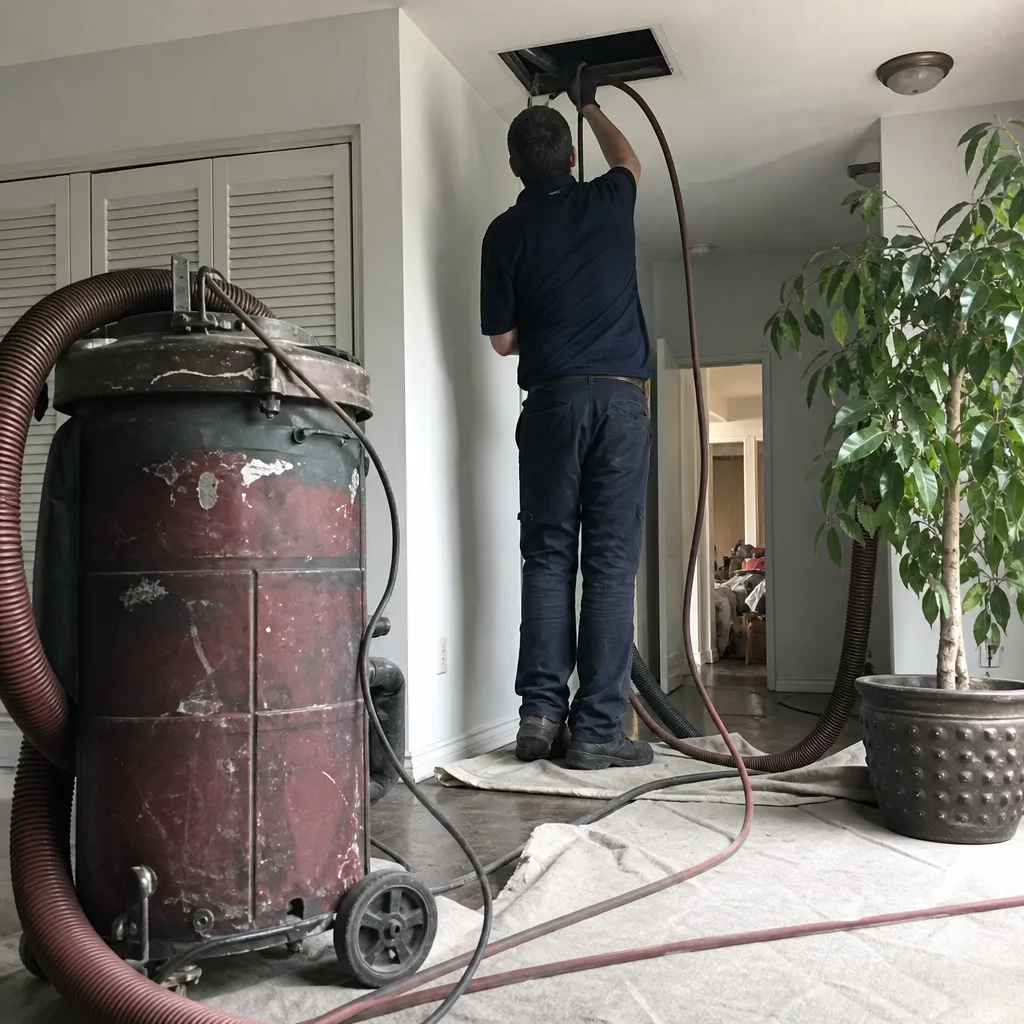
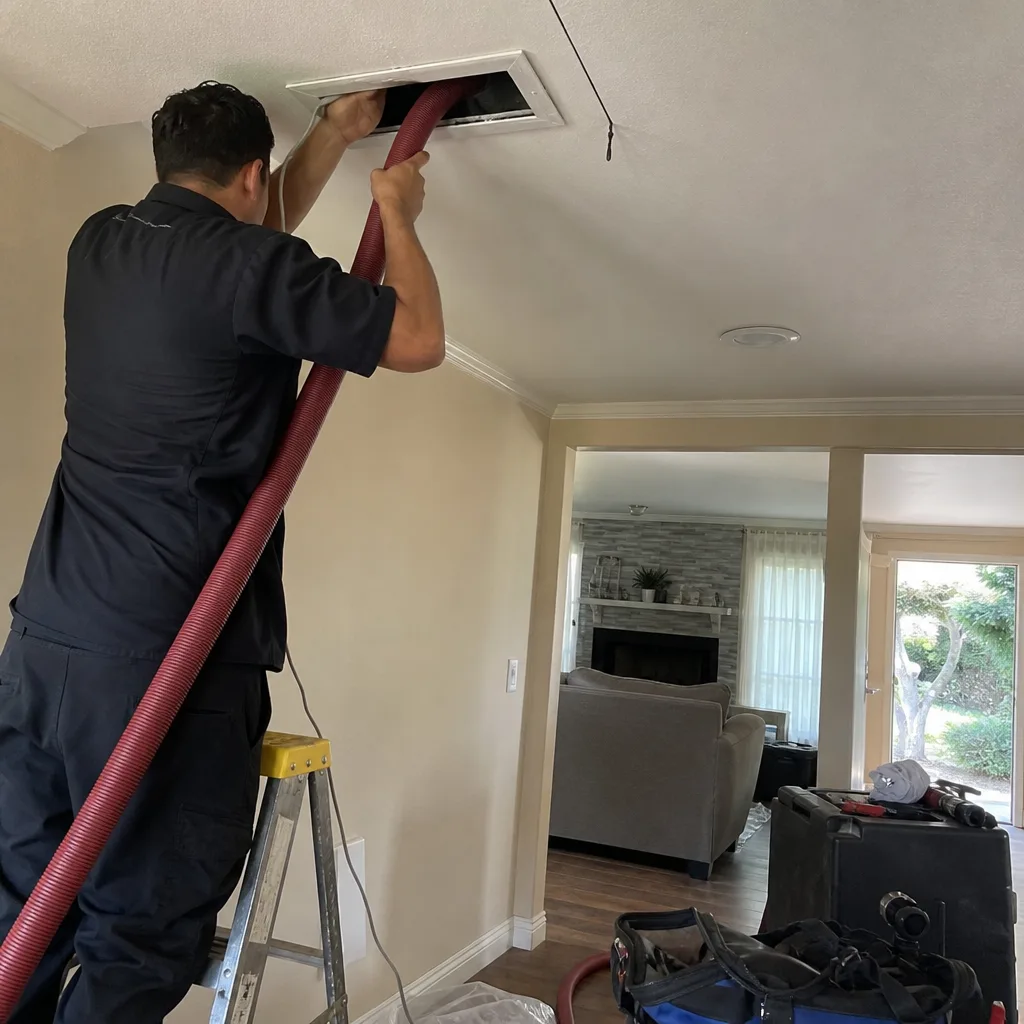
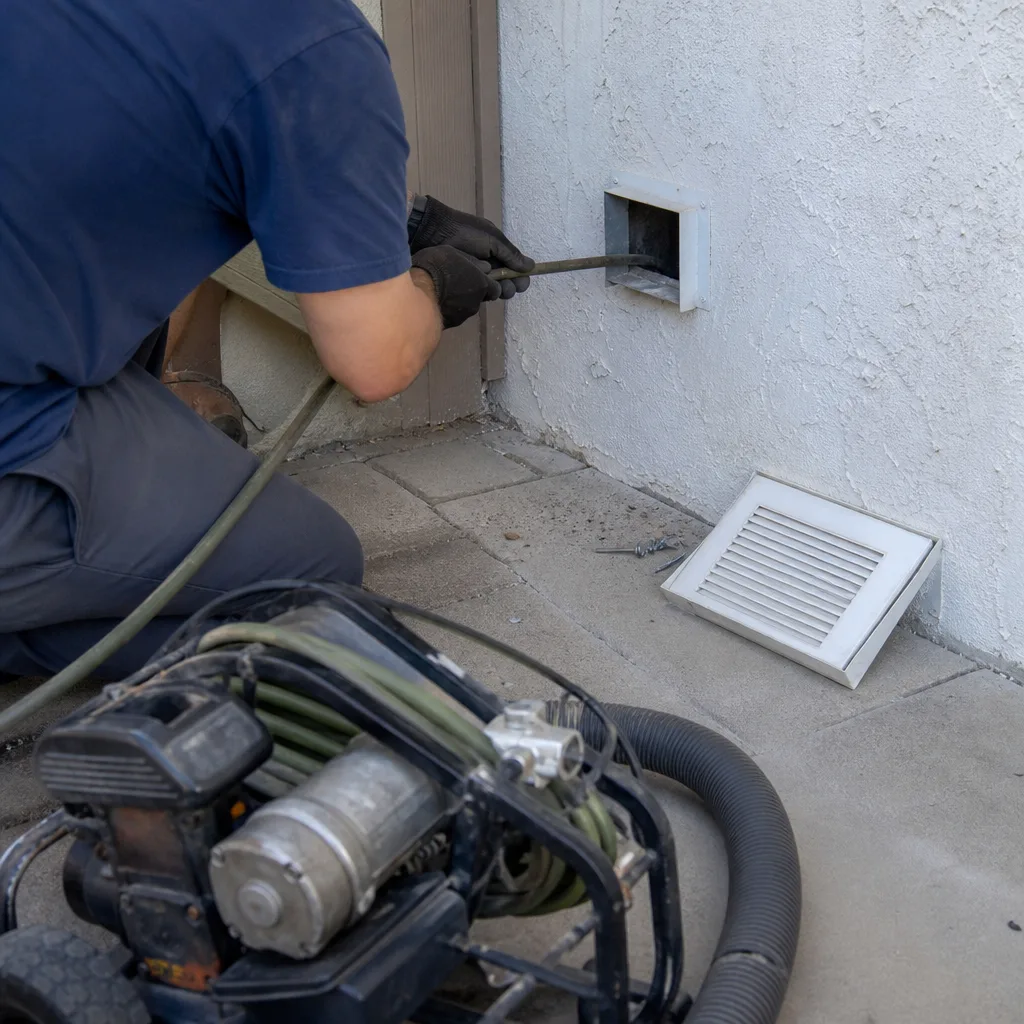
The National Air Duct Cleaners Association, the recognized trade body for this industry, publishes a standard that defines what a legitimate duct cleaning includes. The core requirement is source removal: the cleaning must remove debris from the duct interior, not just loosen it and push it around. A NADCA-standard job uses a negative air machine to place the duct system under vacuum while agitation devices, typically rotary brushes or compressed air tools, dislodge debris from the duct walls. The vacuum contains the debris and removes it from the system.
A blow-and-go job looks different. The technician inserts a blast nozzle into the registers, runs a shop vacuum at the return, and calls it done. What happens during a blow-and-go is partial loosening: some dust exits, more dust re-settles deeper in the duct run, and the fine particulate that caused the homeowner to call is still there two weeks later. These jobs are cheaper because they take under an hour and use hardware-store equipment. They are also the reason some Pasadena homeowners believe duct cleaning does not work, because what they received was not a cleaning.
The equipment benchmark is a practical way to tell the difference. A legitimate company runs a Nikro or Abatement Technologies negative air machine with a HEPA-filtered exhaust, paired with a Rotobrush rotary agitation system sized to the duct dimensions. These are commercial-grade tools, not rental units. We use this equipment on every Pasadena job because it is what the standard requires and what the physical job of removing a decade of accumulated particulate demands.
What a Legitimate Duct Cleaning Looks Like, Step by Step
A thorough duct cleaning in Pasadena runs between 3 and 6 hours for a single-family home, not 45 minutes. Here is the sequence our technicians follow on every job, and what you should expect from any company you hire-see also our How to Hire a Air Duct Cleaning Contractor in Pasadena: A Step-by-Step Guide for vetting providers:
- Pre-inspection with documentation. The technician inspects the supply and return trunks, takes before-photos at each register, and documents what is seen: dust thickness, debris type, any visible moisture staining or pest evidence.
- Written price confirmation. The price is written down before any work begins. No number moves at the door. If the pre-inspection finds a condition that changes the scope, the revised price is put in writing and approved before tools come off the truck.
- System protection and containment. Supply and return registers are sealed. A containment barrier is set around the work area. The furnace or air handler is turned off and its components protected.
- Negative air connection. A HEPA-filtered negative air machine, typically a Nikro or Abatement Technologies unit, is connected to the duct system at the return or at a cut-in access point. This places the entire duct network under vacuum.
- Agitation and source removal. The technician runs a Rotobrush rotary brush through each supply and return run, dislodging debris from the duct walls while the vacuum captures it. Access holes are cut where needed and sealed with proper duct patches, not duct tape.
- Component cleaning. Supply registers, return grilles, the blower fan, evaporator coil, and drain pan are cleaned individually. These components hold significant debris and are part of the system, not extras.
- Final inspection and photo documentation. After-photos are taken at the same positions as the before-photos. The technician walks the homeowner through what was removed and confirms the site is clean.
The whole point of this sequence is accountability. You can see the before and after state of your ducts. You know what was done because you were walked through it.
How Much Air Duct Cleaning Costs in Pasadena
The honest Pasadena price range for whole-system air duct cleaning in a single-family home is $400 to $850. This covers a full cleaning with negative-air source removal on homes up to roughly 2,500 square feet with one furnace and standard duct runs. Homes above 3,000 square feet, with two systems, or with heavily contaminated ducts may run higher. Here is a typical breakdown:
- Single-system home, up to 10 vents: $400 to $550
- Single-system home, 10 to 20 vents: $500 to $700
- Larger home or two systems: $700 to $850+
- Component cleaning, blower and coil included: $100 to $200 of the total above
- Dryer vent cleaning, added on: $90 to $150
Quotes below $300 for a full system in Pasadena should raise questions. At that price point, the job is either a blow-and-go, the crew is not carrying commercial equipment, or the final invoice will somehow grow after the work begins. The bait price is a known pattern in this industry. A legitimate company’s price is a written number attached to a defined scope of work.
Hollis Air Duct Pasadena writes the price before any work starts. That number does not move. If the pre-inspection reveals a different condition than expected, we write the revised scope and price, get approval, then start. This is what Air Duct Cleaning in Pasadena should look like from any company you consider, and it is the standard we apply to ourselves.
What Documentation You Should Receive After the Job
Before-and-after photos are standard, but photos alone are not enough. A reputable Pasadena duct cleaner should hand you the following at the end of the job:
- Before-photos at each register. Taken before agitation begins, with the register open and the duct visible.
- After-photos at the same registers. Taken from the same angle after cleaning, so you can compare directly.
- A written invoice that specifies the scope. Which ducts were cleaned, which components were cleaned, what equipment was used, and the total price.
- A written guarantee. Not a verbal promise. A statement of what is covered, for how long, and what happens if there is a problem.
- Technician identification. The name of the person who did the work and verification that they are background-checked.
Photos prove that something changed, but they do not protect you if the work fails. A written guarantee does. We include our 365-Day Done Right Promise on every job in Pasadena: if the work is not done right, we make it right, and if a second visit is needed within the year, that visit is free. That is in writing, on the invoice, every time.
Red Flags in the Pasadena Market
Pasadena attracts two kinds of duct cleaning companies: the established local operators who have been serving the San Gabriel Valley for years, and the out-of-town crews that sweep through during the fall and spring, run a wave of low-price ads, and disappear. Here are the red flags specific to this area:
- A price under $150 for a whole home. The math does not work. A crew with commercial equipment cannot operate at that price point without selling something once they are inside.
- A verbal-only guarantee. If the guarantee is not written, it does not exist. In California, a verbal promise about warranty coverage is nearly impossible to enforce.
- No proof of licensing or background checks. A legitimate company will tell you who is walking into your home before they show up. We background-check and uniform every technician on every Pasadena job.
- Per-vent pricing. A quote like $18 per vent is a teaser. The final number will be multiplied by additional vents, returns, the main trunk, and “optional” treatments. A whole-system price, written up front, is the only honest number.
- Pressure to add on sanitizers or foggers. Duct sanitizers have a purpose in specific contamination cases, but they are not a standard part of duct cleaning and should never be sold as required work.
The pattern to recognize is this: a company that competes on the lowest teaser price must make up that revenue somewhere else, and that somewhere else is usually the invoice you see after the work is underway. The Garrison Code, which our technicians operate under, settles this before it starts: price in writing, do the job by the book, leave the site clean.
How Often Should You Actually Clean Your Ducts?
The answer consistent with EPA guidance and Pasadena’s specific conditions is this: clean when the ducts are dirty, not when the calendar says so. For most Pasadena homes, that means every 3 to 5 years. Homes with the following conditions will land on the shorter end:
- Homes with occupants who have severe allergies or respiratory conditions, where reduced particulate matters more
- Homes with pets that shed heavily and have forced-air systems that recirculate dander
- Homes that have undergone recent renovation, which introduces construction dust into the return ducts
- Homes in higher-elevation Pasadena neighborhoods exposed to consistent Santa Ana wind-borne dust
- Homes with older ductwork that has not been cleaned in a decade or more
Homes that are cleaned on this schedule and run quality filtration, such as upgraded media filters from Honeywell or Aprilaire, will generally show lighter accumulation at each cleaning interval. The filter does not eliminate duct cleaning, but it slows the accumulation rate. That means the 3 to 5 year interval holds for most homes, not the 12-month interval that the annual cleaning marketers promote.
Common Mistakes to Avoid
- Hiring based on the lowest quoted price. A $99 duct cleaning in Pasadena is a loss leader designed to get a technician into your home so they can up-sell. The real price appears after the work starts. Get the whole-system price written down before you hire.
- Skipping the pre-inspection. A company that gives a firm price without looking at your ducts is guessing. A firm price quoted before any inspection is marketing, not estimating.
- Believing annual cleaning prevents allergies. The EPA does not support this claim. If a company repeats it, they are selling a subscription, not a service.
- Treating duct cleaning as the solution to every indoor air problem. Duct cleaning addresses duct contamination. It does not fix moisture problems, replace poor filtration, or compensate for a leaky building envelope. Those are separate issues.
- Not asking about the equipment. If the answer is “a truck-mounted vacuum” without a named brand or a negative-air machine, ask more questions. Legitimate Pasadena crews run Nikro or Abatement Technologies negative-air units and rotary brush systems.
- Not looking for a written guarantee. A duct cleaning that fails to fully clean can happen. What matters is what the company does about it. A written guarantee tells you exactly what to expect if you call back.
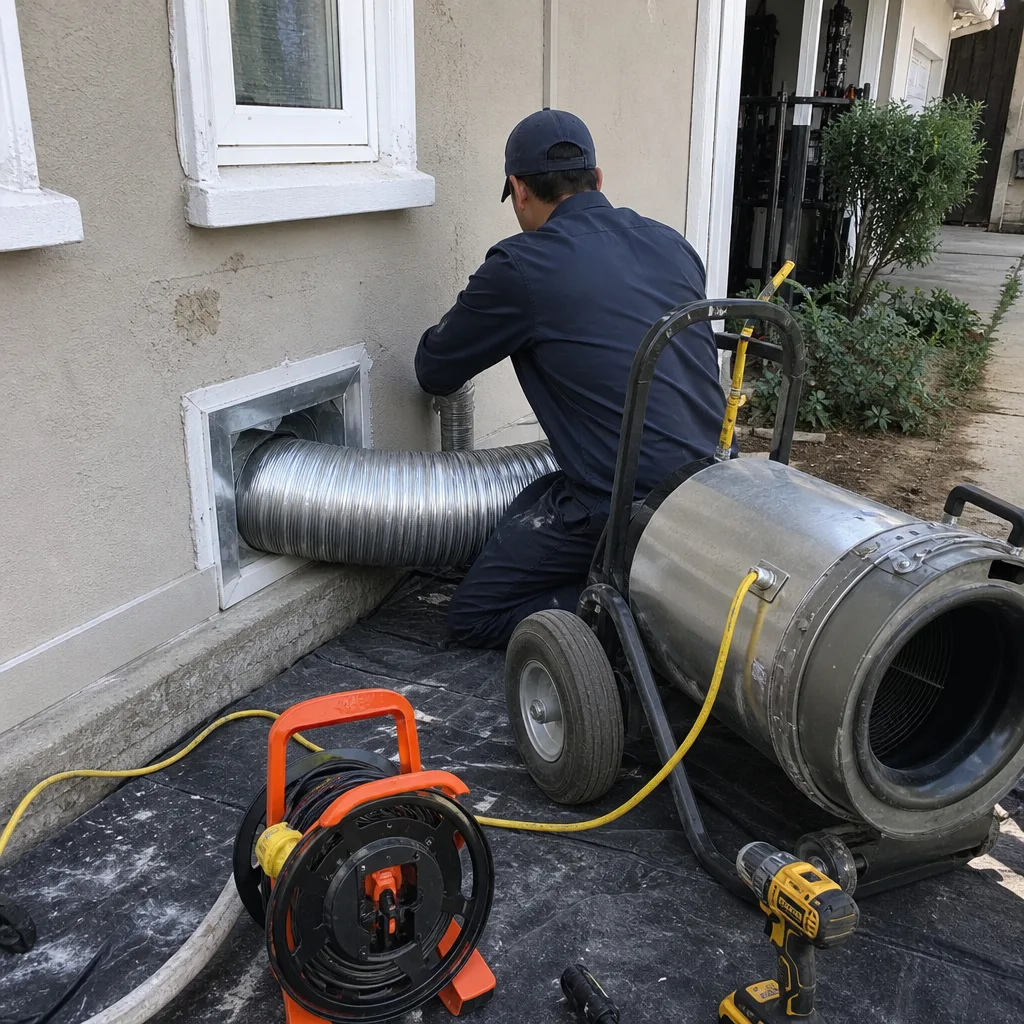
- Ignoring the dryer vent. Many Pasadena homeowners have their air ducts cleaned but never the dryer vent. A clogged dryer vent is a fire risk and should be addressed separately. Dryer Vent Cleaning in Pasadena is a distinct service, not an add-on.
When to Call a Professional
Call when you see visible dust blowing from your registers while the system runs, when you find mold growth inside the ductwork or at the grilles, when you have evidence of rodent or insect infestation in the ducts, when you have just completed a major renovation that generated fine dust, or when your system has not been cleaned in 5 or more years. Each of these is a specific condition, not a calendar event. For a deeper look at this decision, read our DIY vs Professional Air Duct Cleaning: The Pasadena Homeowner’s Decision Guide. If you are in Pasadena and want a straightforward assessment of what your ducts actually need, Hollis Air Duct Pasadena offers free estimates. Call (626) 469-5477.
Frequently Asked Questions
Air duct cleaning in Pasadena typically costs $400 to $850 for a full single-system home, depending on square footage and the number of register openings. Quotes below $300 generally indicate a partial cleaning or a pricing structure that will grow at the door. You can get a written whole-system price from Hollis Air Duct Pasadena over the phone at (626) 469-5477.
Cheaper quotes come from blow-and-go methods, which use a blast nozzle and a shop vacuum instead of a negative-air machine and rotary brush. These jobs loosen some dust and leave the rest, which is why the duct still looks dirty weeks later. A real cleaning takes commercial equipment and 3 to 6 hours, and the price reflects that.
You should receive before-and-after photos taken at the same registers, plus a written invoice that lists every component cleaned. Photos alone are not enough; the written scope and a written guarantee are what make the job verifiable. Hollis Air Duct Pasadena provides both, backed by the 365-Day Done Right Promise.
Every 3 to 5 years for most Pasadena homes, not annually. The EPA does not recommend routine annual cleaning. Clean more frequently after renovation, water damage, pest infestation, or if you have severe allergy concerns in the home.
It can, but the effect depends on how much buildup was restricting airflow. A heavily clogged return trunk does reduce system efficiency, and cleaning restores airflow. Light dust accumulation has a negligible effect on energy use. The efficiency argument is real for heavily contaminated ducts, not a reason to clean annually.
The research does not prove that duct cleaning prevents health problems. However, if dirty ducts are actively discharging visible dust into your living space, removing that debris is reasonable. The answer is to clean when contamination exists, not to treat duct cleaning as a medical intervention.
The Bottom Line
Pasadena homeowners have two forces working on them: legitimate dust from a dry climate and Santa Ana wind events, and aggressive marketing that pushes annual cleanings the research does not support. The honest resolution is condition-based cleaning: inspect, document, clean when the ducts are actually dirty, and skip the calendar subscription. When you do clean, hire a company that uses negative-air source removal equipment, writes the price before starting, and backs the work with a written guarantee that lasts longer than the phone call. That is the standard we operate under at Hollis Air Duct Pasadena home, and it is the standard Pasadena homeowners should demand from any company. If you need Duct Sealing in Pasadena or want a free estimate for your system, call (626) 469-5477.
Written by Roy Castellanos, Owner at Hollis Air Duct Pasadena, serving Pasadena since 2004.
See the difference
 Before
 After
After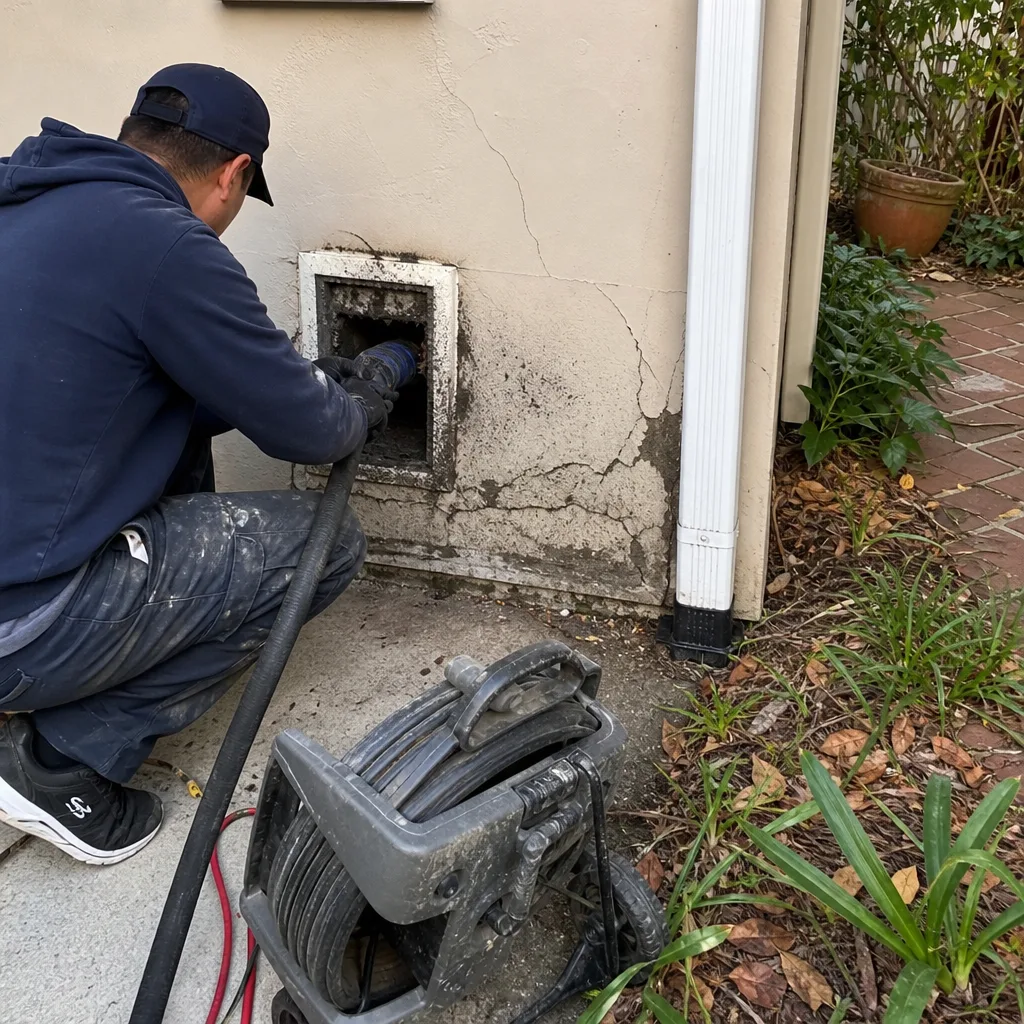 Before
 After
After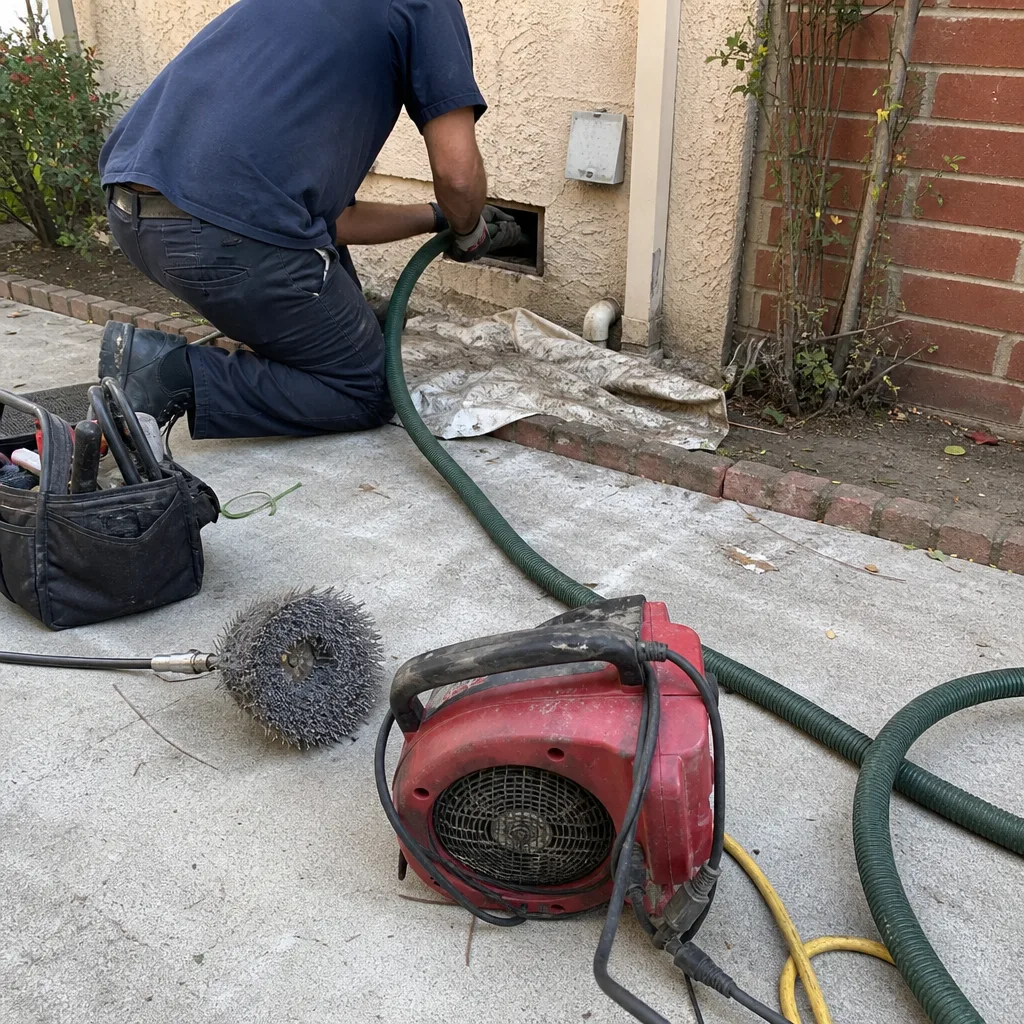 Before
 After
After